
 By Admin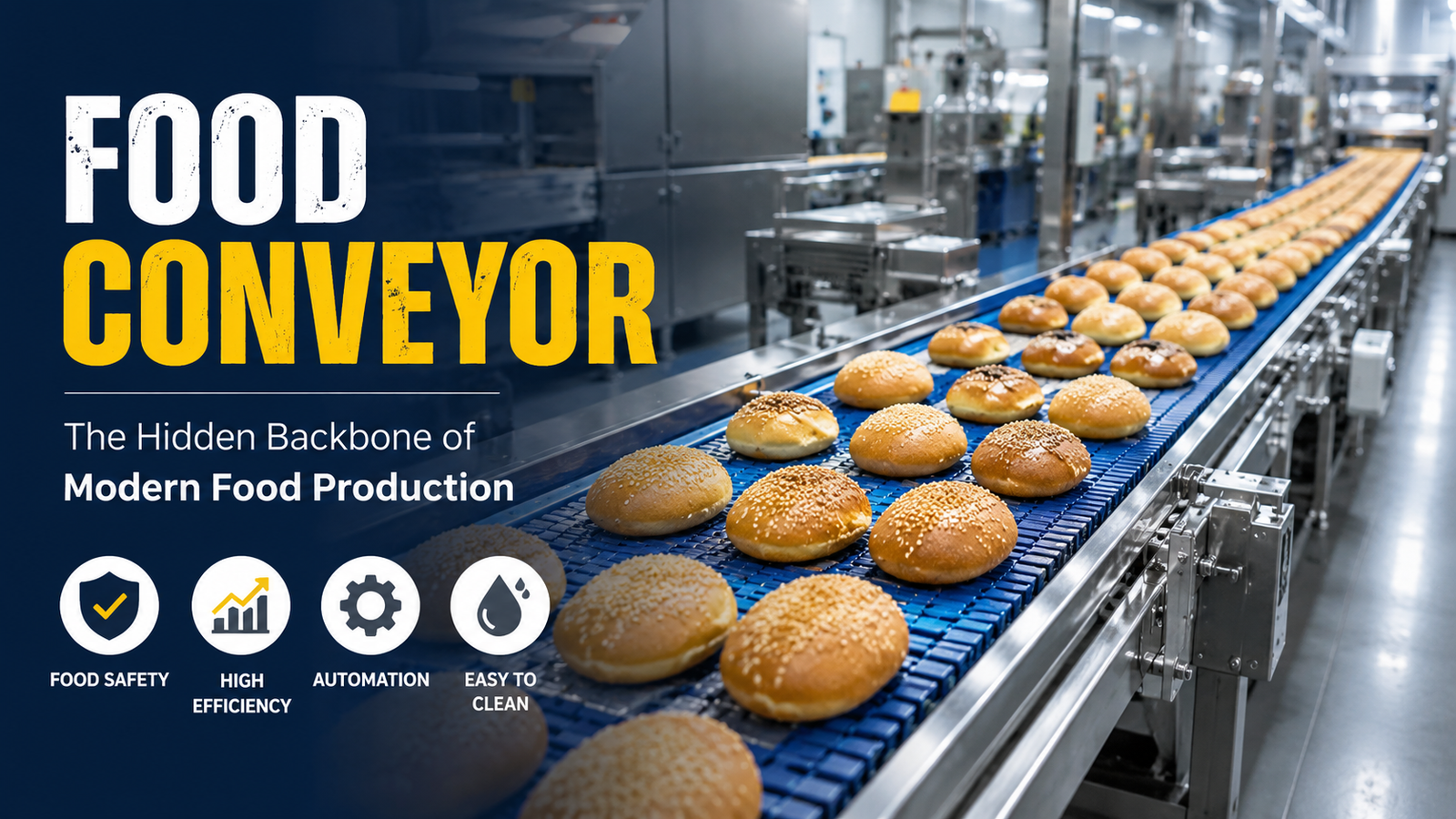
Walk into a modern food processing plant and you’ll hear it before you fully notice it — the steady hum of machines, the movement of packaged products, trays sliding neatly across production lines. Everything flows in rhythm. And sitting quietly at the center of that rhythm is the Food Conveyor.
It’s not exactly the most glamorous machine in a factory. Nobody posts conveyor systems on social media and says “look at this beauty.” But honestly… food production would be chaos without them.
From bakeries and meat processing plants to frozen food factories and beverage facilities, Food Conveyor systems help move products quickly, safely, and consistently. They reduce contamination risks, improve efficiency, and save companies huge amounts of time every single day.
And the funny thing is — most consumers never even think about it.
What Is a Food Conveyor?
A Food Conveyor is a specially designed conveyor system used to transport food products during manufacturing, processing, packaging, cooling, or shipping.
Unlike standard industrial conveyors, food conveyors are built with hygiene as a top priority. The materials used are usually food-grade stainless steel or FDA-approved plastics because they need to withstand regular cleaning, moisture, and exposure to food particles.
Some Food Conveyor systems handle delicate baked goods. Others transport raw meat, vegetables, seafood, dairy products, snacks, or frozen meals.
And every food product behaves differently…
A conveyor carrying potato chips won’t be designed the same way as one transporting raw chicken or sticky candy products. That’s why manufacturers often customize conveyor systems depending on the food type and production environment.
Why Food Conveyor Systems Are So Important
Food manufacturing today moves incredibly fast. Factories are expected to produce large volumes while maintaining strict safety standards.
That’s not easy.
Without a reliable Food Conveyor system, workers would need to manually move products between stations, which slows production and increases contamination risks.
Here’s why these systems matter so much:
- Faster production flow
- Reduced manual labor
- Better workplace safety
- Improved food hygiene
- Less product waste
- More consistent packaging
- Lower operational costs
And honestly, there’s another thing people forget…
Workers get tired. Humans make mistakes when they repeat the same lifting or carrying tasks for hours. Conveyor systems help reduce physical strain and make food plants safer for employees too.
Common Types of Food Conveyor Systems
There isn’t just one kind of Food Conveyor. Different production lines require different setups.
Here are some of the most commonly used conveyor systems in the food industry:
| Conveyor Type | Best Used For | Main Advantage |
|---|---|---|
| Belt Conveyor | Bakery items, packaged foods | Smooth and gentle movement |
| Roller Conveyor | Boxes and packaged goods | Handles heavier loads |
| Modular Plastic Conveyor | Meat and seafood processing | Easy to clean |
| Screw Conveyor | Powders and grains | Controlled product movement |
| Vibratory Conveyor | Snacks and fragile products | Reduces product damage |
| Incline Conveyor | Moving products upward | Saves factory space |
Some factories even combine multiple conveyor systems together to create a fully automated production line.
Pretty impressive when you think about it.
Food Safety and Hygiene Matter… A Lot
Food safety regulations have become much stricter over the years. And for good reason.
A poorly designed conveyor can trap food particles, moisture, or bacteria in hidden areas. That creates contamination risks that could lead to recalls, wasted products, or serious health concerns.
Modern Food Conveyor systems are designed to reduce those risks.
Many include:
- Washdown-friendly surfaces
- Corrosion-resistant stainless steel
- Open-frame construction
- Easy-to-remove belts
- Antimicrobial materials
- Drainage-friendly designs
And cleaning matters more than people realize.
In some facilities, conveyors are sanitized multiple times a day. Especially in meat, poultry, seafood, and dairy plants where hygiene standards are extremely strict.
Industries That Use Food Conveyor Systems
Food Conveyor systems are used almost everywhere in the food world. Seriously… once you start noticing them, you realize how essential they are.
Industries that commonly rely on conveyors include:
Bakery Production
Bread, cookies, cakes, and pastries move through ovens, cooling stations, and packaging lines using conveyors.
Meat and Poultry Processing
Conveyors transport raw products safely while minimizing direct human handling.
Dairy Industry
Milk products, cheese containers, yogurt cups — all need smooth and hygienic transport systems.
Frozen Food Manufacturing
Frozen vegetables, pizza, fries, and ready meals move through freezing tunnels using specialized conveyors.
Beverage Plants
Bottle and can production lines depend heavily on conveyor automation.
And honestly… even small food businesses are starting to adopt conveyor systems because labor costs keep rising.
Key Features to Look for in a Food Conveyor
Not every conveyor system is built the same. Choosing the wrong one can create expensive maintenance problems later.
Here are some important features manufacturers usually look for:
1. Easy Cleaning
If cleaning takes too long, production slows down. Simple designs save time.
2. Durability
Food plants operate for long hours. Conveyor systems must handle constant use without frequent breakdowns.
3. Corrosion Resistance
Moisture and cleaning chemicals can damage poor-quality materials quickly.
4. Flexibility
Some companies need conveyors that can handle different product sizes or packaging styles.
5. Energy Efficiency
Factories are paying closer attention to energy costs these days.
And honestly, maintenance costs can sneak up fast if businesses buy cheap conveyor systems just to save money upfront.
Benefits of Automation in Food Conveyor Systems
Automation has changed food production dramatically over the last decade.
Today’s Food Conveyor systems can include:
- Smart sensors
- Automated sorting
- Weight checking
- Product tracking
- Robotic integration
- Real-time monitoring
This helps factories improve speed and reduce human error.
But… automation doesn’t mean workers disappear completely. It usually means employees shift into more technical or supervisory roles instead of repetitive manual tasks.
That balance matters.
Challenges Food Manufacturers Still Face
Even with advanced conveyor technology, food manufacturers still run into challenges.
Some common issues include:
- Conveyor belt wear and tear
- Product jams
- Cleaning downtime
- Cross-contamination risks
- Equipment maintenance costs
- Space limitations inside factories
And older production plants sometimes struggle to upgrade because modern conveyor systems require layout adjustments.
It’s not always as simple as “just install a new conveyor.”
The Future of Food Conveyor Technology
The future of Food Conveyor systems looks smarter, cleaner, and more automated.
Manufacturers are already investing in:
- AI-powered monitoring systems
- Predictive maintenance software
- Energy-saving motors
- Hygienic modular designs
- Faster sanitation systems
And sustainability is becoming a huge focus too.
Factories want conveyor systems that use less energy, reduce waste, and last longer without constant replacement.
Honestly… the conveyor industry has become far more innovative than most people realize.
Final Thoughts
The modern food industry depends heavily on the Food Conveyor. It’s one of those behind-the-scenes technologies people rarely notice, yet it keeps entire production facilities moving efficiently every day.
From improving food safety to reducing labor strain and speeding up production lines, conveyor systems have become essential in almost every area of food manufacturing.
And as automation continues to grow, Food Conveyor technology will probably become even smarter and more important in the years ahead.
Funny thing is… consumers may never think about conveyor systems while buying snacks, frozen meals, or baked goods at the store.
But those products likely traveled across dozens of conveyor belts before ever reaching the shelf.