 By Admin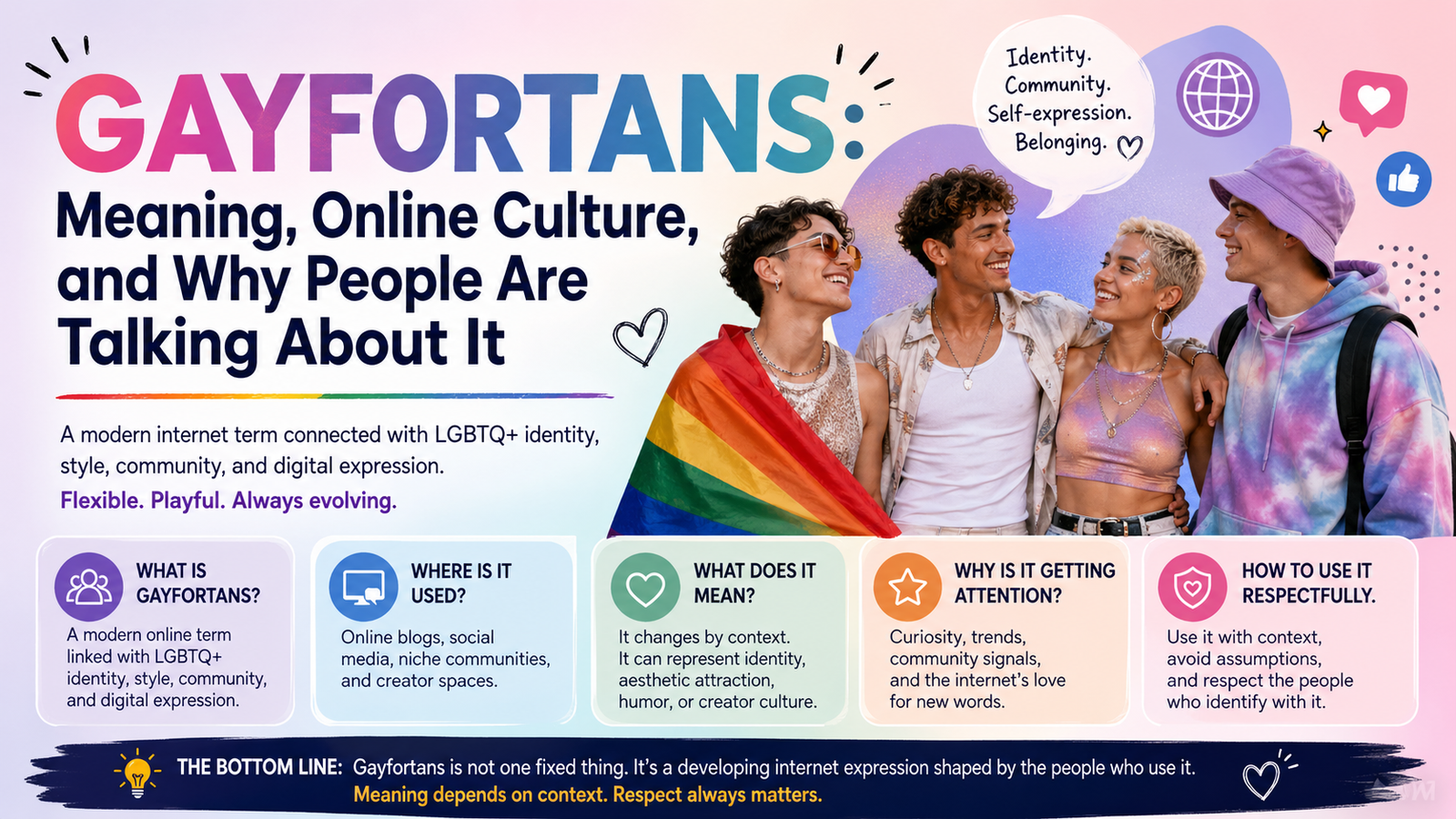
The word gayfortans is one of those internet terms that makes people stop for a second. You see it, you read it again, and then you wonder, “Okay… what does this actually mean?”
That confusion is normal. Gayfortans is not a traditional word with a long history behind it. It is more like a modern online expression. Some websites connect it with LGBTQ+ identity, digital culture, creativity, and online community. Others describe it as a playful term linked with attraction, style, tanning, or creator-based content. So yes, the meaning is still a little loose.
And maybe that is exactly why people are searching for it.
What Does Gayfortans Mean?
In simple words, gayfortans seems to describe a niche online identity or interest connected with LGBTQ+ culture, personal expression, and digital spaces.
It is not an official group. It is not a formal movement. It is also not a fixed label that everyone uses in the same way. Recent blog sources describe it as a flexible term that can point toward queer identity, shared online humor, creativity, and digital belonging.
A simple way to understand it:
| Term | Simple Meaning |
|---|---|
| Gayfortans | A modern online term linked with LGBTQ+ identity, style, community, and digital expression |
| Main Use | Online blogs, social media, niche communities, creator spaces |
| Tone | Playful, identity-based, sometimes aesthetic-focused |
| Fixed Meaning? | No, it changes by context |
| Best Way to Use It | Carefully, respectfully, and with context |
That last part matters. Since gayfortans is not fully defined, using it without context can confuse readers.
Why Is Gayfortans Getting Attention?
The internet loves new words. Sometimes a term starts as a joke. Sometimes it begins inside a small group. Then blogs pick it up. Social media users repeat it. Search volume grows. Suddenly, people want a full explanation.
Gayfortans seems to fit that pattern.
People may search for it because:
- They saw the word on a website or social platform.
- They want to know if it is linked to LGBTQ+ culture.
- They are checking if it is a trend, brand, or community.
- They are curious about its meaning in creator spaces.
- They want to understand whether it has a serious or playful use.
But here is the honest part: the term is still developing. It does not have the same clear meaning as words like “pride,” “ally,” or “queer community.”
The Online Identity Side of Gayfortans
One common explanation connects gayfortans with online identity. In this sense, the term may reflect how people build small digital communities around shared feelings, style, humor, and self-expression.
For many LGBTQ+ people, the internet has long been a place to find support. Not everyone has a safe local community. Not everyone can speak openly in real life. Online spaces can give people a softer place to ask questions, share jokes, post stories, and feel seen.
Gayfortans, in this context, may represent that kind of digital belonging.
Not a club. Not a rulebook. More like a loose signal.
A person might use a term like this to say:
- “This style feels like me.”
- “This space understands my humor.”
- “These people get my experience.”
- “I feel connected here, even if it’s online.”
And that is why small terms can become meaningful. They give people a tiny shared language.
The Aesthetic Meaning: Style, Tan, and Attraction
Some sources describe gayfortans as a playful expression connected with attraction toward tan or sun-kissed appearances.
That meaning is more casual. It sounds like internet slang. The kind of phrase someone might use jokingly in a caption, comment, or meme.
In this version, gayfortans is less about community identity and more about visual taste or attraction. Think of it like a phrase used around style, summer looks, beach photos, fitness culture, or social media aesthetics.
But again, context matters. One person may use it as a joke. Another may use it as part of identity. Another may use it as a keyword for content.
That is why writers should avoid giving it only one meaning.
Gayfortans and Creator Culture
Another online angle links gayfortans with creator spaces, especially where audiences support creators directly through paid or private content models. Some recent posts describe it as part of LGBTQ+ creator-audience culture, where creators build niche communities around personality, identity, and direct fan support.
This does not mean the term always has that meaning. But it shows how wide the usage can be.
In creator culture, niche words help people find very specific content. A small keyword can become a signal. It may tell users what kind of audience, mood, identity, or style a creator is connected with.
For example, creators often use niche terms to show:
- Their personality
- Their community
- Their visual style
- Their values
- Their audience type
- Their content category
Gayfortans may work in that same way for some users.
Is Gayfortans an Official LGBTQ+ Term?
No, based on current search results, gayfortans does not appear to be an official LGBTQ+ term. It is better described as an emerging internet phrase.
That means it should be used carefully. If you are writing about it, do not present it as a long-established identity label. A safer description is:
“Gayfortans is a modern online term with different meanings across LGBTQ+ digital culture, style, and creator communities.”
That sentence leaves space for the term to grow. It also avoids making false claims.
Benefits of Understanding Gayfortans
Even if the word feels unusual, learning about it can help readers understand how internet language works.
Here are some useful takeaways:
- Language changes fast online. New words can appear before dictionaries notice them.
- Small communities create their own signals. These signals may feel strange to outsiders.
- Identity terms need respect. Even playful words can matter to someone.
- Context decides meaning. The same word can mean different things in different spaces.
- Writers should avoid overclaiming. New terms need careful explanation.
And honestly, that is the main lesson here.
Gayfortans is less about one perfect definition and more about how people use words to find connection.
Common Misunderstandings About Gayfortans
Because the term is new and unclear, misunderstandings happen easily.
Some people may think it is a formal organization. It does not seem to be. Some may think it only means one thing. It does not. Others may treat it as a joke without knowing that some people may connect it with identity or community.
A few mistakes to avoid:
- Do not call gayfortans an official movement.
- Do not use it in a mocking way.
- Do not assume every person uses it the same way.
- Do not connect it to adult content automatically.
- Do not write about it as if it has a settled history.
But you can explain it as an online term that is still taking shape.
How to Use the Word Gayfortans in Content
If you want to use gayfortans in an article, title, or social post, keep the wording clear.
Good examples:
- “What does gayfortans mean online?”
- “Gayfortans is a new digital term with several possible meanings.”
- “Some people connect gayfortans with LGBTQ+ identity and online community.”
- “The meaning of gayfortans depends on where and how it is used.”
Weak examples:
- “Gayfortans is a global movement.”
- “Everyone uses gayfortans this way.”
- “Gayfortans has one official definition.”
- “Gayfortans only means creator content.”
The better approach is honest and simple. Readers trust that.
Final Thoughts
Gayfortans is a new and flexible internet term. It appears in online discussions about LGBTQ+ identity, digital culture, style, community, and sometimes creator-based spaces. But it does not have one fixed meaning yet.
That makes it interesting — and a little confusing.
The safest way to understand gayfortans is to see it as a developing online expression. It can point toward belonging. It can point toward aesthetic attraction. It can point toward niche creator culture. The meaning depends on context.
And that is how many internet words begin. Small, unclear, maybe even odd at first. Then people use them, reshape them, and give them meaning over time.