
 By Osman Blake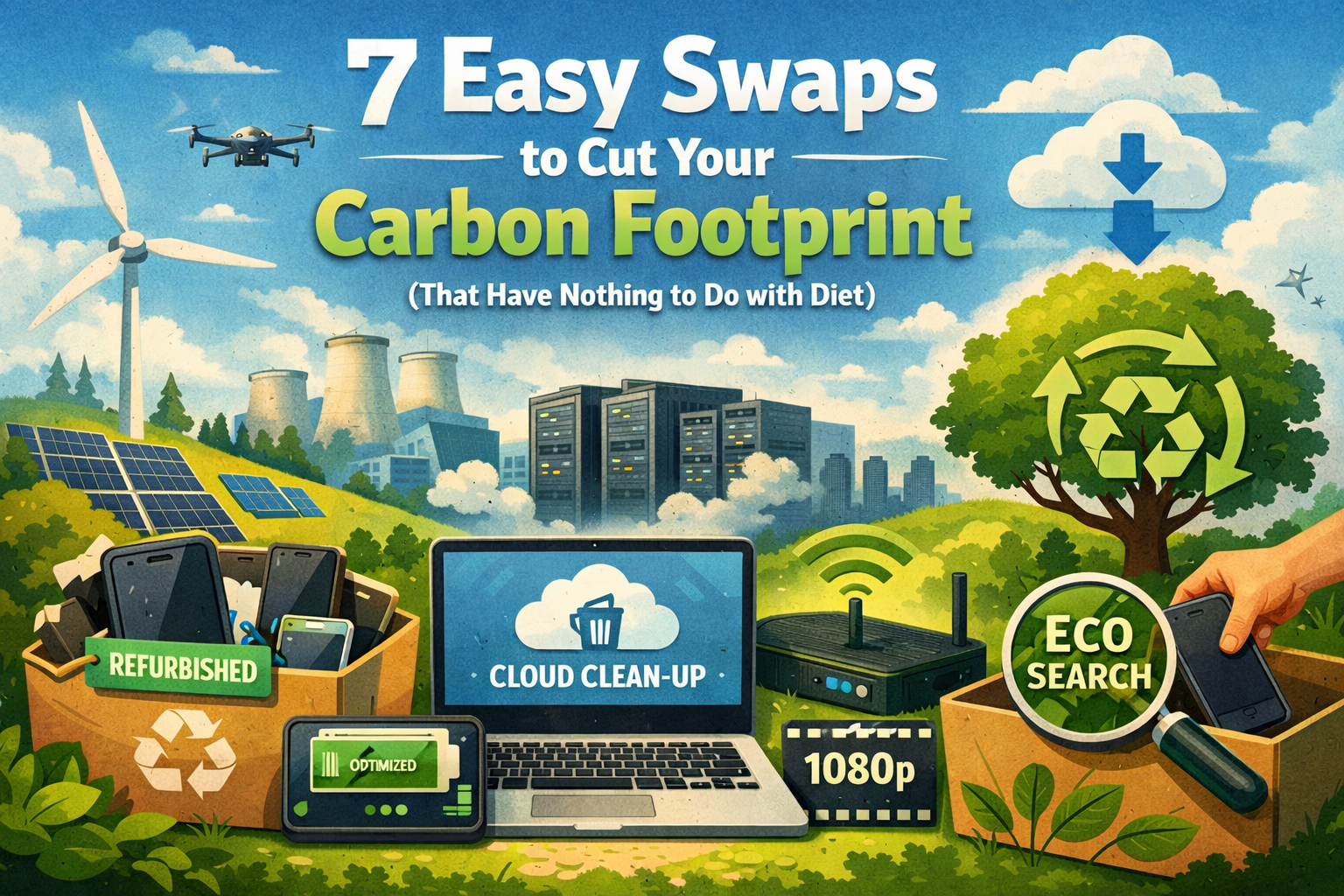
Our food systems are responsible for over 25% of greenhouse gas emissions, making them one of the biggest drivers of the planet’s climate change. The tech industry’s contribution to greenhouse gas emissions seems almost insignificant in comparison to food or travel environmental costs; however, tech still has its significant contributions to the declining environmental situation, and just because the percentage is lower, it doesn’t mean we can ignore it.
Fortunately, taking steps to lower the carbon footprint of tech consumption on an individual level does not require a complete lifestyle change, only an adjustment of a few habits around the devices and electronics you already own and use.
In this post, we’re giving you 7 habit swaps to help you reduce the environmental effects of using technology on an individual level.
How Your Personal Device Affects The Environment
Let’s first take a quick look at how a personal device, such as a smartphone, can affect the environment. While most people think of the battery charging, the network signals, and cloud storage, the actual harm starts much earlier, before the phone is even made.
We have identified 5 general steps of the smartphone lifecycle, with each step having its own considerable effects on every aspect of the environment, from reserves of non-renewable resources to the humans themselves.
- Step 1: Mining materials and rare metals that go into smartphones manufacturing.
- Step 2: The manufacturing stage, where most of the chemical waste pollution and energy consumption of a smartphone’s lifecycle occurs.
- Step 3: Distribution of not only the final product, but also the global supply chain moving parts across the world for assembly.
- Step 4: The usage stage, where the carbon footprint occurs in small amounts on an individual level, but amounts to extensive harm in large numbers collectively.
- Step 5: End-of-Life stage, where incorrect ways of disposing of electronics turn them into harmful and dangerous E-waste, affecting all life forms on the planet.
The 7 Digital & Tech Swaps
In this post, we’re focusing on actions you can take to reduce the environmental effects of the 4th step of the tech lifecycle, which is when the device is in use, with a final step addition of what to do when your personal devices reach the end of life stage.
- The “Hardware Lifecycle” Swap (Refurbished vs. New): The first and most obvious swap after looking at the costs of manufacturing a new smartphone is to opt for refurbished devices instead of brand-new ones. This way, you’re extending the life and value of materials already mined to make the existing phone, and the environmental costs already happened in the manufacturing process.
- The “Smart Charging” Swap (Preserving Battery Health): The first part that wears out in your phone and makes you need to change it is the battery. The chemical age of a battery is highly dependent on your charging habits. So, instead of leaving your phone charging overnight, which results in aging the battery faster, activate the Optimized Battery Charging option from the Settings app on your phone under Battery options. This can extend your battery’s healthy state for 4 years instead of only 2 years when you fully charge it overnight.
- Streaming Quality Swap: One of the most overlooked practices in tech consumption is streaming quality. When you stream a video at 4K, it requires massive energy consumption from data centres and their cooling systems. This practice is overlooked because its environmental effect doesn’t happen directly in front of you, but in faraway locations where the data centres are. However, you can play a part in reducing that energy consumption by lowering the quality from 4K to 1080p, especially if you’re watching the content on a smaller screen like a laptop or a phone, where the difference between the two quality options is barely noticeable.
- The “Cloud Clean-up” Swap: Unlike popular belief, digital data, including docs and photos, is not completely without any physical existence. The items you have stored in the cloud are occupying physical space in servers that must run 24/7 and consume enormous amounts of energy. To reduce your part in this, swap 10 minutes a day of your social media scrolling time for 10 minutes of cloud-cleaning time. Use this time to remove old, useless screenshots or recipes you never cooked, and the multitude of blurry photos that you don’t remember what they were supposed to be!
- The Search Engine Swap: Most people are unaware that every single search query they put into a search engine results in CO2 emissions, energy consumption from the data centres, and water consumption for cooling systems. While it’s impossible not to use search engines altogether, there are search engines, such as Ecosia, that actively use their profits to plant trees in high-need areas to make up for their environmental cost. So, swap for the greener search option to lower your own online carbon footprint.
- The Connectivity Swap: Connection to the internet consumes power and energy on two levels: the network and the device you’re using. On both levels, Wi-Fi connections are less energy-consuming and have less carbon footprint, thanks to fiber optics networks, compared to cellular data, whether 4G or 5G. So, whenever Wi-Fi is available, swap the data connection to the fixed-line connection until you’re on the move, and 4G/5G connection is the only available option.
- The E-Waste “Safe-Passage” Sawp: we finish from where we started. Instead of leaving your old devices sitting in your drawers or throwing them in the bin, which is worse and more dangerous, trade them in for cash. This way, they can be recycled and re-enter the market either as refurbished or replacement parts.
Most of these swaps require only a change in behaviour and habits, except for the two swaps related to recycling and refurbished electronics. For these two swaps, you need to find a trusted source to both buy and sell devices. QwikFone is one of the UK’s most trusted smartphone refurbishers that also has a buyback program. So, whether you want to buy refurbished phones or sell your old devices, you can’t go wrong with QwikFone, as they offer safe deals with immediate cash payout for old smartphones buyback as well as a reliable 12-month warranty policy on refurbished smartphones with new accessories included for free. For more peace of mind, you also get a 30-day return period with a full refund guarantee.
Conclusion: Collective Changes Make a Difference
While one person buying a refurbished phone, switching to a green search engine, recycling a few old devices, or lowering their streaming quality makes a minute difference in terms of lowering the tech consumption carbon footprint, expanding these swap choices across our collective behaviour will make the difference. Start with the first step by choosing a second life for electronic devices, and then extending their life with the suggested swaps in this post. As more people start to adopt these easy swaps, we’ll start to see the difference in a greener Earth.